Identifying a Foundation Problem
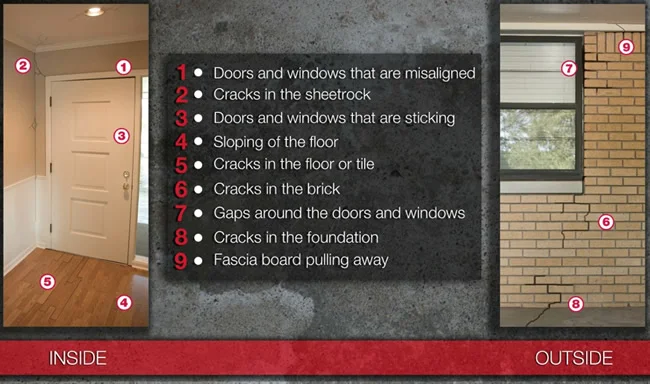
Exterior indications of foundation problems
- Doors that will not open or close properly
- Gaps at the corner of fascia trim
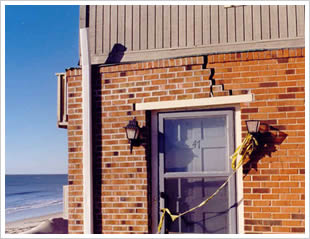
- Diagonal cracks in the wall at corners of doors and windows
- Gaps between the garage door and the pavement at either side of the garage door
- Windows that are hard to open and close
- Cracks in the exposed grade beam of the house
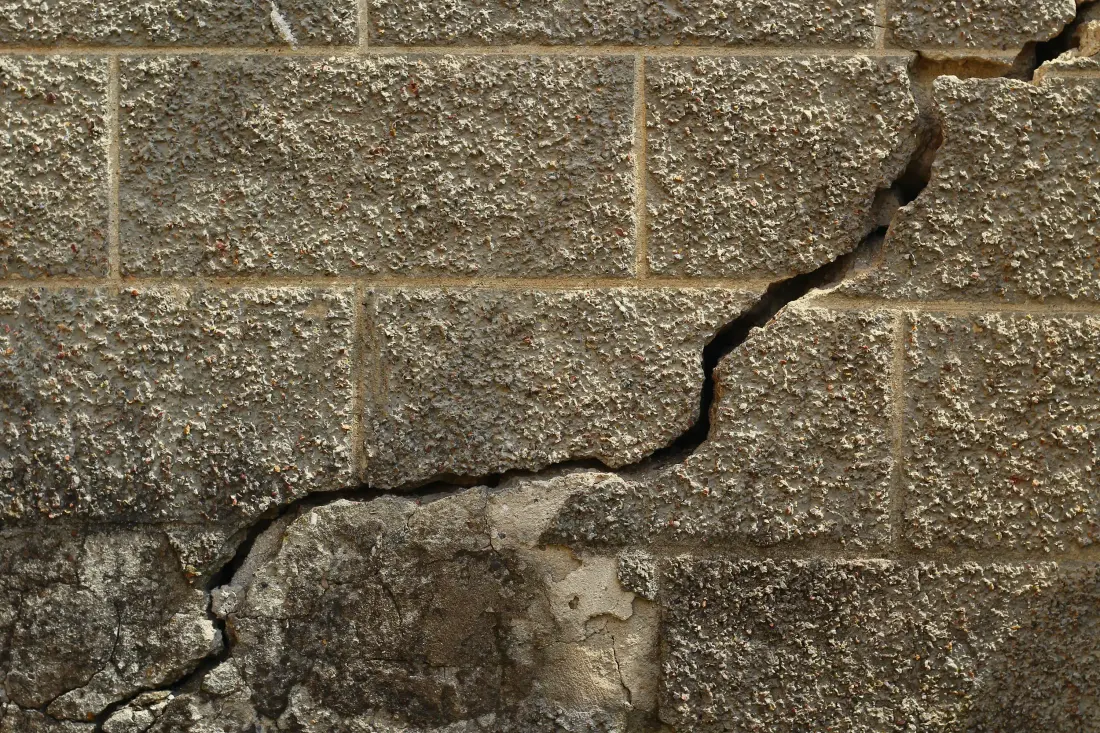
- Cracks in bricks and mortar
Interior indications of foundation problems
- Unlevel floors
- Large cracks in the concrete slab
- Gaps above kitchen cabinets
- Cabinet doors that will not stay shut
- Diagonal cracks in the wall at corners of doors and windows
- Curling and tearing of existing sheetrock repairs
- Leaks and cracks in and around the fireplace
Exterior or interior indications of foundation problems could be caused by either settlement or upheaval.
Settlement means a portion of the house foundation has dropped below the original foundation elevation. This occurs due to a loss of soil bearing capacity caused by compaction of fill, loss of moisture in the supporting soil, or erosion of the supporting soil. In many cases, settlement originates and is more pronounced at the perimeter of the slab, since the slab perimeter is the most susceptible to loss of moisture and differential moisture conditions.
Upheaval means the slab has risen above the original foundation elevation. This happens most often due to the introduction of moisture under the foundation. The most frequent cause of this moisture is a plumbing leak under the slab, most commonly on the drain side of the plumbing system.
Note that some damage is strictly "cosmetic" and does not interfere with the foundation's load-bearing capacity, cracks in floor tiles or sheetrock, for example. A qualified foundation repair contractor or a structural engineer can help you determine whether the problems you're facing are cosmetic or will require foundation repair.